
The two words sound almost identical, and they are often used as if they mean the same thing. Both describe giving old clothes another life instead of sending them to landfill. But the routes they take are very different, and so are the results.
Understanding the difference helps you make better decisions about what to buy, what to keep and what to do with clothes you no longer wear. It also explains why so many small makers are choosing to upcycle.
What recycling clothes actually means
Recycling breaks a garment down into its raw material so that material can be used again. There are two broad approaches. Mechanical recycling shreds fabric back into fibers, which can be spun into new yarn or used as stuffing, insulation or cleaning cloths. Chemical recycling uses processes to break certain fibers down further so they can be rebuilt.
Both are useful, but both have limits. Shredding shortens fibers, which often lowers their quality, so recycled fiber is frequently blended with new material. Many garments are made from blends that are difficult to separate. And the process itself needs collection systems, machinery and energy. According to the Ellen MacArthur Foundation, less than one percent of the material used to produce clothing is recycled into new clothing.
What upcycling means
Upcycling skips the breaking-down stage. Instead of turning fabric back into fiber, it keeps the fabric as fabric and uses it to make something new. A pair of worn jeans becomes part of a jacket. Factory offcuts are pieced into a bag. A surplus roll that never found a buyer becomes a set of blazers.
The word suggests going up in value, and that is the point. The finished item is often more interesting and more useful than what it was made from. Upcycling relies on design, skill and handwork rather than heavy machinery.
It is also not the same as simply reusing. Wearing a second-hand shirt as it is counts as reuse. Upcycling goes a step further: the fabric is taken apart, redesigned and sewn into a new garment with its own shape, fit and purpose.
The key differences at a glance
- Recycling breaks fabric down into fiber; upcycling keeps fabric whole and reshapes it.
- Recycling usually happens in large industrial facilities; upcycling often happens in small workshops.
- Recycled fiber can lose quality; upcycled fabric keeps its original strength and texture.
- Recycling needs sorting by fiber type; upcycling can work with mixed fabrics side by side.
- Upcycling depends on skilled hands, which can create local jobs and training.
Why the difference changes everything
Upcycling keeps the value that has already been put into a fabric. Growing the fiber, spinning, weaving and dyeing all took water, energy and labor. When fabric is shredded, much of that investment is lost. When it is upcycled, it is carried forward into a new garment.
It also changes who benefits. Recycling at scale needs specialist plants. Upcycling needs people who can sort, design, cut and sew. That is why it fits so naturally with community workshops and with brands that want to create steady work. In Cairo, for example, upcycling brands such as Green Fashion work with Egyptian women artisans, providing fair income while giving reclaimed fabric a new purpose.
Do we still need recycling?
Yes. Not every garment can be upcycled. Fabric that is badly worn, torn beyond repair or too small to piece is better suited to fiber recycling or reuse as rags. The two approaches work best together: upcycle what you can, recycle what you cannot, and keep as little as possible out of landfill.
What you can do with this knowledge
Before giving clothes away, ask whether a tailor or local maker could turn them into something you would wear. When you shop, look for pieces made from reclaimed or surplus fabric rather than new material. And when something truly cannot be worn or reworked, find a textile collection point rather than putting it in the bin.
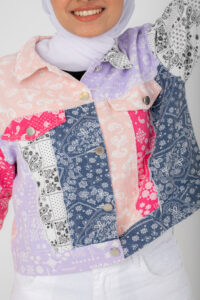
Upcycled clothes also tend to have more character. Patchwork, contrast panels and mixed textures are not compromises; they are signs of a garment with a history. Because the fabric is reclaimed, colors and patterns may vary slightly from piece to piece, which many people come to love.
The bottom line
Recycling turns clothes back into raw material. Upcycling turns them into something new while keeping what made them valuable. Both have a place, but upcycling keeps more of the fabric, more of its quality and more of the human skill that goes into making clothes worth wearing.