
You fold a bag of clothes you no longer wear, drop it at a donation point and feel lighter. It is a generous habit, and it does help. But once that bag leaves your hands, its journey is often longer and more complicated than most of us imagine.
Understanding what happens next is not a reason to stop donating. It is a reason to donate more thoughtfully, and to think differently about the clothes we buy in the first place.
The first stop: sorting
Donated clothes are almost always sorted before they go anywhere. Whether they reach a charity, a community group or a commercial collector, someone has to decide what each item is good for. Clean, wearable pieces in good condition are separated from damaged ones, and items are grouped by type, season and quality.
This is where many donations take very different paths.
Four paths a donation can take
Path one: worn again nearby
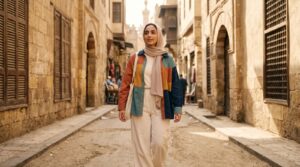
The best outcome is that clothes go directly to people who need and will wear them. In Egypt, much giving happens close to home, through families, neighbors, mosques, churches and local charities, especially around Ramadan, the Eids and the start of winter. When clothes are passed on this way, they are usually chosen with a specific person in mind and are far more likely to be worn.
Path two: resold or exported
In many countries, especially in Europe and North America, people donate far more clothing than local charity shops can sell. Surplus garments are often sold in bulk to traders and shipped abroad, where they are resold in second-hand markets across parts of Africa, Asia, Eastern Europe and Latin America.
This trade supports many livelihoods. But it has a downside. Garments arrive in large compressed bales, and buyers often cannot see the contents before they pay. Reporting from markets such as Kantamanto in Accra, Ghana, one of the largest second-hand clothing markets in the world, has described how a significant share of each bale can be unsellable because of poor quality or damage.
Path three: recycled or turned into rags
Clothes that cannot be worn may be cut into cleaning cloths or shredded into fibers for insulation, stuffing or padding. This keeps material in use, but it is a step down in value. According to the Ellen MacArthur Foundation, less than one percent of the material used to make clothing is recycled into new clothing.
Path four: waste
Some donated clothing ends up exactly where we hoped it would not: in landfill or burned, either in the country where it was donated or after being shipped abroad. Large dumps of discarded clothing, such as those reported in Chile’s Atacama Desert, have drawn international attention to the problem.
The root cause is volume. When so many cheap garments are produced and discarded so quickly, no donation system can absorb them all.
How to donate better
Donating still matters. A few habits make sure your clothes have the best chance of a second life:
- Give only clothes that are clean and in good condition.
- Repair small problems such as loose buttons before donating.
- Give directly to people or local groups you know will use them.
- Ask organizations what they actually need, especially by season.
- Send badly worn fabric to textile collection or upcycling projects instead.
- Buy fewer, better clothes so there is less to give away.
A quick check before you give
Before a piece goes into the donation bag, hold it up and ask whether you would be happy to receive it yourself. Is it clean, complete and ready to wear today? If it needs a wash, a button or a small stitch, take ten minutes to do it first. That small effort can be the difference between a garment that is worn again and one that is sorted straight into the waste pile.
Think about timing as well. Warm clothes are most useful before winter, and festive outfits are most welcome in the weeks before an Eid.
Giving old fabric a new purpose
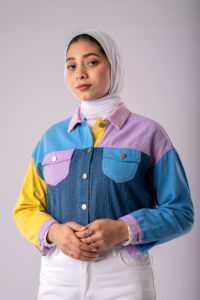
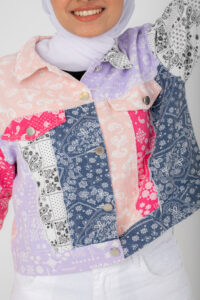
There is another route for clothes that will not be worn again as they are: upcycling. Around the world, designers and small workshops cut second-hand clothes, reclaimed denim and factory offcuts into new jackets, blazers, bags and footwear. In Cairo, brands such as Green Fashion work with women artisans to do exactly this, keeping good fabric in use while creating steady, fair work.
The next time you clear out your wardrobe, think of donation as the beginning of a garment’s next chapter, and choose the path most likely to keep it in use.