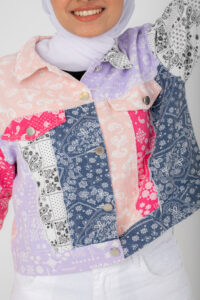

Long before anyone used the word sustainability, people were joining small pieces of cloth to make something larger, warmer and more beautiful. Fabric was precious. It took weeks or months to spin, weave and dye, so no usable scrap was ever thrown away.
Patchwork, the craft of sewing pieces of fabric together into a new whole, grew out of that necessity in many cultures at once. Over centuries it became something more: a way of telling stories, marking life events and expressing identity. Here is a short tour through its history.
Ancient roots, including in Egypt
Some of the earliest evidence of pieced and layered textiles comes from Egypt. An ivory carving from the early dynastic period, held in the British Museum, appears to show a king wearing a quilted cloak. A leather funerary canopy made for an Egyptian queen around three thousand years ago, decorated with colored pieces stitched together, is often cited as one of the oldest surviving examples of patchwork and appliqué.
The tradition continues in Cairo today. In the historic Street of the Tentmakers, near Bab Zuweila, craftsmen still create khayamiya, the richly patterned appliqué textiles once used to line tents and pavilions.
Mending as an art form in Asia
In Japan, rural families wore and used boro, cotton garments and bedding patched again and again over generations. Worn areas were covered with new scraps and held in place with sashiko, a simple running stitch that also strengthened the fabric. What began as thrift is now admired worldwide for its deep indigo tones and layered beauty.
In Bengal, spanning parts of India and Bangladesh, women developed kantha, layering old saris and stitching them together with fine running stitches into quilts, wraps and covers. Many kantha pieces were embroidered with motifs that carried personal and family meaning.
Quilts in Europe and America
In Britain and later North America, pieced quilts became a central household craft from the eighteenth and nineteenth centuries onwards. Women cut leftover fabric and worn clothing into geometric shapes and arranged them in repeating blocks. Patterns gained names, such as log cabin and flying geese, and were shared between neighbors and generations.
Quilting was often social. Women gathered to stitch together, sharing skills and conversation. In the twentieth century, the quilters of Gee’s Bend, Alabama, became widely celebrated for their bold, improvisational designs made from work clothes and scraps, and their quilts have been shown in major museums.
Toward the end of the nineteenth century, the so-called crazy quilt became fashionable. Instead of neat geometric blocks, irregular scraps of silk, velvet and other fine fabrics were pieced together at random and decorated with elaborate embroidery along the seams. It showed that patchwork could be playful and decorative, not only practical.
What these traditions share
Across continents and centuries, patchwork traditions have a surprising amount in common:
- They began with the need to use every scrap of valuable fabric.
- They were largely carried by women, passed from mother to daughter.
- They strengthened and extended the life of worn textiles.
- They turned practical work into a form of personal expression.
- They often brought people together to sew, learn and share.
Patchwork today
In recent years, patchwork has returned to fashion with fresh purpose. As awareness of textile waste grows, designers are rediscovering the craft as a practical way to turn offcuts and old clothes into new garments. What was once a sign of thrift has become a sign of care, creativity and respect for materials.
Today, upcycling workshops from Cairo to Tokyo carry the craft forward. In Egypt, women artisans piece together factory offcuts, surplus fabric and reclaimed denim into patchwork jackets, blazers, trousers and quilted bags, bringing an old craft into everyday modern wardrobes. Because the fabric is reclaimed, colors and patterns vary from piece to piece, just as they always have in patchwork.
Why the craft suits modern design
Patchwork is well suited to working with reclaimed material because it does not need large, uniform lengths of cloth. Designers can combine offcuts of different sizes, weights and colors, and the seams themselves become part of the look. Handmade patchwork pieces are often one of a kind, while larger workshops use set patterns so the shape and fit stay consistent.
A craft with a future
Patchwork has survived for thousands of years because it answers a timeless question: how do we make the most of what we already have? Every seam in a patchwork garment connects it to generations of makers who refused to let good fabric go to waste.