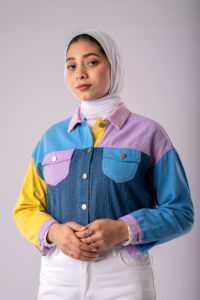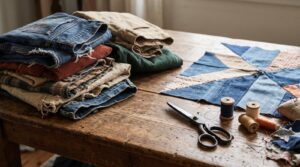

The first thing you notice in an upcycling workshop is the color. Bags of second-hand clothes, stacks of folded denim and bundles of factory offcuts line the walls, sorted into loose families of blue, rust, green and cream. The second thing is the sound: the steady hum of sewing machines, the snip of scissors and quiet conversation between women working side by side.
This is where reclaimed fabric becomes a jacket. Every workshop has its own rhythm, but the journey usually unfolds in a similar way, step by step.
From donation bag to workbench
Step one: collecting and sorting
Every piece begins as material that already exists. Some arrives as second-hand clothing, some as surplus rolls, and some as cut-offs left over from garment factories. None of it is ready to use straight away.
The first job is sorting. Each item is checked for fabric type, weight, condition and color. Heavy denim goes in one pile, lighter cottons in another. Anything too worn or stained for a quality garment is set aside, because a reclaimed jacket still needs to be strong enough to wear for years.
Step two: cleaning and preparing
Second-hand clothes are washed before anything else happens. Then comes deconstruction, which is slower than most people expect. Seams are unpicked, zips and buttons removed, and garments opened out into flat panels of usable fabric.
Pressing is the final part of preparation. Flat, smooth fabric is far easier to cut accurately, and accuracy matters when dozens of small pieces must line up perfectly.
From workbench to finished jacket
Step three: planning the patchwork
This is where design meets the material on the table. Each style has a set pattern, so the shape and fit stay consistent across every size. What changes is how the available fabric is arranged within that pattern.
Artisans lay out panels, step back, swap a piece of indigo for a lighter wash, and try again. The goal is balance: colors that sit well together and a layout that matches the design. Because the fabric is reclaimed, shades can vary slightly from one batch to the next, which is why product photos are a close guide rather than an exact match.
Step four: cutting and sewing
Once the layout is agreed, pieces are cut and sewn into larger panels before the jacket itself is assembled. Joining many small pieces adds more seams than a conventional garment has, so each one needs care. Seams are pressed, finished and checked as the work moves forward.
Then come the details that make a jacket feel finished:
- Collars and cuffs shaped and topstitched.
- Pockets placed so they sit evenly on both sides.
- Linings or facings added where the design calls for them.
- Buttons and fastenings sewn on firmly so they stay put.
- Hems finished cleanly so they hold up to regular washing.
A note on waste
Even in an upcycling workshop, cutting leaves small scraps behind. Rather than throwing them out, the smallest usable pieces can go into pouches, bag panels and details, so as little fabric as possible is wasted along the way.
Step five: the final check
Before a jacket leaves the workshop, it is turned inside out and inspected. Loose threads are trimmed, seams are tested, and the fit is compared with the pattern. A final press and it is ready to be photographed, packed and sent to its new owner.
The women at the heart of the work
None of this happens without skilled hands. In many upcycling workshops, including in Cairo, this work is done by women artisans. The strongest workshops pair it with steady, fair pay and training in sewing and upcycling, building skills that range from pattern cutting to the careful piecing that patchwork demands. A steady income and a recognized craft give women more security and more choice, and that matters as much as the garments themselves.
That is the part a photo cannot show: the hours of sorting, unpicking, arranging and stitching, and the women whose craft turns forgotten fabric into something worth wearing.
Why it takes longer, and why that is worth it
An upcycled jacket takes more time to make than a factory-made one, because the material has to be found, cleaned, taken apart and rebuilt. That extra time is exactly what gives the jacket its value. It keeps good fabric in use, supports skilled work and results in a garment made to last.
Next time you put on a patchwork jacket, take a moment to look at the seams. Each one is a small decision made by someone who cared how it turned out.